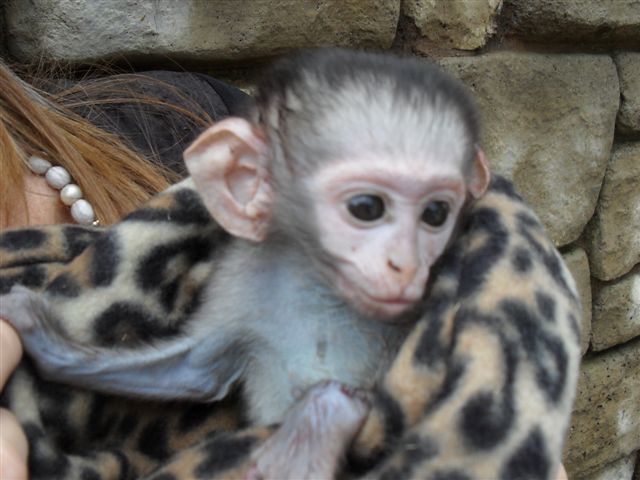
Showing posts with label baby Vervet. Show all posts

Monday, 18 July 2011

BABY MONKEY STORM WATER DRAIN RESCUE DRAMA

One thing about this business of monkey rescue is that you can be quite sure that you will constantly be challenged to do the almost impossible as a routine part of your daily rescue effort.
One such situation confronted us last Tuesday afternoon, July 12, when we responded to an impassioned plea for help from our veterinarian, Dr Kerry Easson.

Working in her Durban North garden on her day off, Kerry’s attention was drawn to a monkey’s agitated chattering beyond her front hedge. Curious, she went out into the road to see what all the fuss was about and saw an adult female Vervet monkey peering into the storm water drain in the centre of the t-junction intersection close by. Kerry went to the drain and peered through the circular, perforated cast-iron drain cover. She could hardly believe what she saw – a small baby Vervet monkey perched on the stepping rung near the top of the two-and-half meter deep manhole.

Totally flummoxed as to how the monkey had got there, Kerry did the first thing that came to mind - she called Monkey Helpline!

Carol and I jumped into our vehicle and rushed from Westville to Durban North as fast as we could considering we had to negotiate afternoon rush hour traffic made worse by faulty traffic lights and disorganized road works.

We arrived to find an agitated Kerry tapping her wrist watch at us as if to say, “what kept you?”, and a small crowd of curious onlookers and wannabe helpers. It was a relief to see Doug Fairall there. Doug is a friend and feral cat catcher supreme and together we had previously had experiences involving cats rescued from similar situations as this one we now faced with the little monkey.

One look at the tightly set, very heavy cast iron drain cover and we knew that our efforts would be wasted without the necessary heavy duty equipment which we were certain must be a normal part of the Metro water workers’ issued “tool box”.

But we decided to try and lift the lid ourselves before troubling the overworked Metro storm water standby team. Very soon we realized that we would have more success trying to lift the lid on South Africa’s arms deal corruption allegations. Desperate to get the monkey out so that we could reunite her with mommy Vervet who was anxiously waiting in a nearby tree top and keeping a protective eye on proceedings before the fading daylight forced her to follow her troop to their sleeping location, we decided to call out the relevant Metro work team. Calls to Metro water got no response other than unanswered ringing. Calls to the emergency services, however, got an immediate response and in no time a big, bright yellow Fire and Accident Emergency truck arrived with a friendly and willing emergency rescue team. Our joy was short lived when we realized that all they could offer was a bigger crow-bar than the one we had. Their best efforts were to no avail, proving the adage that "bigger isn’t always better" and so, sincerely apologetic at being unable to assist, they departed – with their crow-bar - and a promise to get hold of Metro storm water.

Regularly, as we tried to devise a plan to free the trapped monkey, we could see her small arms and hands stick up through the vents in the drain cover as if beckoning her mother to come and fetch her, and her frightened cries echoed upwards. As soon as it became dark the little monkey stopped calling for her mom and just sat hunched over in depressed acceptance of her fate. With all the banging and clanking, caused by our efforts to lift the drain cover, the little monkey never lifted her head, not even with the constant interference of torchlight being shone into the drain to see if she had moved into one of the connecting drain pipes to escape the noisy activity above her.

Hours, and many frustratingly unproductive phone calls, later we finally had the satisfaction of seeing the Metro Storm Water standby team arriving in their truck. But once again our hopes were dashed when they too offered a crow-bar as the tool of the moment. We could not believe that no special lifting device existed that would easily lift out the stubborn drain cover. So vociferously did we dismiss their offer of a crow bar that they offered to bring a “jack-hammer” to break out the entire cast iron drain top. Thanks, but no thanks! Imagine the terror in that small monkey sitting in the confines of a man hole with a jack-hammer beating the hell out of the road above.

Then sanity prevailed and the shift supervisor, now alerted to the goings on, agreed to come on site and offer the benefit of his experience. Even before arriving he authorized a crane truck to come on site and lift up the drain cover. As the crane truck arrived we knew that the little monkey would soon be safely out of that drain.

Half an hour later, it was already 7.30 pm, the crane lifted the drain cover out of the bed it had been so reluctant to leave. There had been a few frustrating moments when the steel rods, hooked into the drain cover and attached to the crane hook, bent open under strain as if made of plastic, but once these were replaced with heavy duty chains the drain cover came out with surprising ease.

And through all of this commotion the little monkey still huddled over as if by keeping her eyes closed and her back to the world above she would remain safe until her mom could rescue her in the morning. She was easily grabbed and passed into the safe and comforting arms of Carol, a full three-and-a-half hours after we first saw her frightened little face looking up at us from inside the drain. Only then did we realize how tiny she was, probably no older than six months, and covered in small cuts and healing injuries all over her little body.

For the next week or so the little monkey, named Kerry after our vet who first drew our attention to her plight, will stay in the Monkey Helpline "high care". An on-site veterinary check-up showed that she had no physical injuries from her ordeal in the storm water drain but could not discount the possibility of an ailment that might have driven her into the road water run-off drain in the first place. Once Carol is happy that Kerry monkey is healthy and ready to be released, we’ll take her back to where we rescued her and try and reintroduce her to her mother.

Kerry monkey can owe her life to alertness of vet Kerry and the combined efforts and compassion of a whole bunch of people.


What a rescue!!


Pics - Top to bottom:

1 The two-and-half meter deep storm water drain out of which the baby monkey was rescued.

2 Carol takes a hands-on approach in affixing the chains that did the trick.

3 Newly rescued Kerry monkey cuddles safely iunto Carol

4 A relieved, but proud, rescue team with Dr Kerry Easson (green theatre pants left front) and Durban Metro supervisor, Ishen Sukai (extreme right). Ishen's wife, Venesha, and young daughter, Shradda, came along to witness the operation that had called them all away from the comfort of home.

Sunday, 07 November 2010

What an eventful past few weeks. I could write three blog postings every day in an effort to keep you abreast of everything we have experienced and witnessed. There has been heartache and elation, incredulity, anger, confirmation in our belief that most people are genetically programmed to be caring and compassionate, and even laughter.

In this blog posting I’ll share with you “part 1” of an experience that grows from the depths of desperate heartache to the unexpected pinnacle of elation.

Heartache as we gathered up the broken bodies of five Vervet monkeys killed south of Durban on the N2 in one tragic incident – three on the southbound lanes and two on the edge of the median adjacent to the north bound lanes. Two adult females, their two-year old daughters and an about-to-be-born baby, all killed by motor vehicles, with the unborn baby literally smashed from her mother’s broken body. And as we darted across a busy freeway collecting the bodies, two newly orphaned young Vervet monkeys sat in a nearby tree calling pathetically for mothers and siblings whose answering calls and loving caress they would never hear or feel again.

There will no doubt be criticism of our risk-taking on a busy freeway to collect the bodies of already dead monkeys, but unfortunately, leaving them on or near the road often results in further tragedy as related monkeys, especially the youngsters or mothers of those killed, run back onto the road confused as to why the dead or injured monkeys are not moving or following. Furthermore, dead animals left in the road often lead to the death of other animals, such as raptors and mongooses, even domestic dogs and cats, who attempt to feed off the freshly killed animal.

The two monkeys on the median had been moved there by Karon Hutchison who witnessed the terrible tragedy and couldn’t bear to leave the two bodies on the road surface where they would be mangled by racing wheels. It was as she was about to move the body of the adult female that she noticed the little baby miraculously still clinging to his dead mother. In disbelief she removed the totally unharmed baby from his mother’s body, took him home with her to St Winifreds and called Monkey Helpline. That’s where we met baby Kyle, named after Karon’s son who was lovingly holding and nurturing the baby when we arrived to take over the responsibility of caring for the tiny tot. (Top pic shows the proud trio of Gary, Karon and Kyle Hutchison with baby Kyle, just before handing him into the care of Monkey Helpline).

En route back to Durban we rang Jenny Morgans, Monkey Helpline’s human surrogate mother of note, and told her that a newly orphaned Vervet monkey baby was heading her way. By the time we reached Jenny she had already prepared a warm bottle, a cuddly toy and warm, soft blanket to welcome Kyle.


(Bottom pic is a close-up of baby Kyle - a few days old yet already orphaned).

With baby Kyle safely entrusted to the best care possible other than what he would have experienced with his own mother, Carol and I turned our attention to the next rescue call-out!

But if the tragedy of part 1 has left you sad and despairing, then look out for part 2, to follow shortly. I promise it will leave you smiling and with a warm feeling in your heart!

Sunday, 19 September 2010

YOU CAN HELP US HELP MONKEYS


“I own a thatched property in Marina Beach, lower south coast. My roof is being systematically destroyed by a troop(s) of monkeys. When I contacted my insurance broker about a claim to effect repairs, he told me that monkeys are classed as vermin, so I would not be able to claim for the damage/repairs. Is this the case?If monkeys are vermin, is it legal to poison them like rats & mice? I understand the need for conservation of nature in the area. However I can't afford the bills to continually repair my thatch”.

Above is an extract from a letter I received this past week, and it so clearly illustrates the stupidity that informs the thinking of a small but dangerous number of morally retarded cretins whose actions are having a terrible impact on the lives of many monkeys throughout KwaZulu-Natal and other parts of South Africa. What kind of twisted mind are we dealing with, who even considers poisoning as an acceptable means of resolving his problems with monkeys?

Certainly in KZN monkeys are not classified as vermin and it is most definitely illegal to “poison them like rats and mice”! Fact is that monkeys are protected nationally by the Animal Protection Act and provincially by the KZN Nature Conservation Ordinance. They are also protected by the efforts of organizations like Monkey Helpline, various animal protection groups, and by a not insignificant body of ordinary people who feel very strongly about the welfare of monkeys and other animals.

Which brings me to the point of this blog post, namely, to show that without the support of the animal-caring public, Monkey Helpline cannot carry out its mandate to educate, rescue, provide veterinary care, post-veterinary care, rehabilitate, release or provide life-long sanctuary.

Yes, without this support Monkey Helpline would not even have known about most of the three-hundred and twenty-seven rescue callouts we responded to between January 1 and June 30 this year. These calls originated from across the age, race and gender spectrum, from people representing all sectors of our society, but all of them with three things in common – decency, integrity and compassion!

And if this seems like a high number of monkeys in need of our help, believe us when we tell you that it represents only a fraction of the total number of monkeys suffering and dying in places where no caring person gets to see them and do something to help. If Monkey Helpline rescue figures are extrapolated to the total area traversed by troops of monkeys throughout KwaZulu-Natal every day, then a staggering number of monkeys are being injured or killed here every year. Judging by the non-scientific observations by Monkey Helpline rescuers of the situation as it affects urban Vervet monkeys, it is not unrealistic to fear the extinction of these little animals within the lifetime of our current generation.
(The pics exhibited in this posting show just how deranged a person can be. Top pic shows a beautiful adult male Vervet with an arrow shot from a bow through his arm. Next pic shows the x-ray of his humerus shattered by the arrow just above the elbow joint. Bottom pic of this monkey after the broken arrow was removed from his arm, with veterinarian, Dr Kerry Easson holding the three pieces of arrow.)

If you want to make a real difference for monkeys in South Africa, you cannot do better than to show your support for our efforts to help them. We know from our day to day experiences, and the people we meet and talk to, that there are far more people who care about the welfare of monkeys than there are people who dislike and loathe monkeys to the extent of harming or killing them. Unfortunately the pro-monkey people are not as vociferous about their feelings as are the anti-monkey people. We need to let these anti-monkey cretins know that they are a small minority whose aggression and violence towards monkeys will not be allowed to go unchallenged.

So, how do YOU show the monkeys that you are batting for them?

Its pretty simple. Arrange with your kids' school for Monkey Helpline to come and do a Power Point-supported talk to pupils and teachers. Volunteer to work at the Monkey Helpline “high care” and recovery facility. Distribute Monkey helpline leaflets. Become a "monkey monitor”. Help us at our Essenwood Market table on Saturdays between 8.30am and 2pm – an hour or two whenever you can, would be a great help. Become a Monkey helpline member, donor or sustainer. This and so much more – contact Steve or Carol on 082 659 4711 or 082 411 5444 respectively or email us at steve@animalrightsafrica.org .
Remember, without your help and support we cannot continue helping monkeys in distress. THE MONKEYS NEED YOU!!!

Friday, 27 August 2010

Ever so "Flippin' Cute"

Monkey Helpline blog readers will recall the little Vervet monkey that Carol was holding close in the blog posting of 16 August, “Monkeys still in harm’s way”. Since named “Flippin’ Cute”, because he is such an amazingly affable and bright little chap who holds no grudges against humans in spite of the despicable and cowardly way he has was attacked by some pellet gun-wielding low-life, he has made an amazing recovery.

In addition to being shot three times into his small body, of which at least one pellet went into his chest, he also sustained a badly fractured skull, probably after falling out of a tree or off a roof when he was shot (top pic shows just how swollen Flippin' Cute's eyes were after the trauma to his head).

Now both eyes are completely open and he has perfect vision (centre pic). There does not, at this stage appear to be any brain damage in spite of the severe concussion he suffered. He has an amazing appetite and already I am trying to convince Carol that he is a tad plump! And he is ever so cute!!

Evenings, whilst Carol is doing admin work he sits next to her on the table with a bowl of mixed food and chomps away to his heart’s content. And he watches TV with a real interest (bottom pic), responding to various things he sees, especially the animals on Animal Planet. He was terrified by a big dog even before it barked, watched curiously as a cat was treated by a vet, and then jumped into Carol’s arms and hid his face in her jersey when a turkey gobbled.

He is uncharacteristically afraid of other small monkeys and so he is being introduced slowly to two other monks of about the same age. It is important that he keeps in touch with his monkey-hood because we will make every effort to reunite him with his troop and his mother. If we don’t succeed in doing this he will be bonded into a troop of monkeys being prepared for rehabilitation and release. Sadly, at the time we rescued him he was alone with no other monkeys around, which means that his mother had abandoned him after he was injured, or else she too had been shot and was unable to stay with him. Quite possibly she is dead! Healthy mother Vervets don't easily give up on their babies!!

Let’s hope we get to see Flippin’Cute running back into his mother’s arms – and Carol’s tears will be a mixture of sadness and joy!

Wednesday, 04 August 2010

Win some! Lose some! Too many lost!

On a daily basis I am appalled by the callous indifference shown to Vervet monkeys by a small, morally dysfunctional group of people living in those residential areas also frequented by Vervet monkeys.

Recently a local newspaper published a number of letters from people antagonistically inclined towards the presence of monkeys around their homes. Fears about monkeys possibly attacking babies, spreading rabies and just being monkeys were graphically and emotively presented. This in spite of the fact that Monkey Helpline has for years been educating people regarding the truth about monkeys and debunking the myths that have lead some people to erroneously see them as vermin, carriers of rabies and being prone to attacking and severely injuring adults, children and dogs, even cats on the odd occasion!

Fact is that in KZN monkeys are NOT classified as “vermin” – they are protected nationally in terms of the Animal Protection Act, and provincially in terms of the KZN Nature Conservation Ordinance. They do NOT attack people or their pets, only biting when they are themselves attacked by dogs or if a person tries to catch or hurt a monkey. They are NOT carriers of rabies and there has NEVER been an officially recorded case of a rabid monkey in South Africa. There is NO monkey “over-population” or “population explosion” as so many uninformed people are quick to proclaim when calling for monkeys to be culled or captured and relocated. On the contrary, with so many urban monkeys dying daily from injuries sustained when hit by motor vehicles, attacked and bitten by dogs, shot with pellet guns, electrocuted on power lines, caught in razor wire, poisoned, trapped and snared, these deaths, including those of monkeys dying from injuries sustained during inter- and intra-troop fights which are particularly vicious due to the stress the monkeys are under because of persecution and habitat destruction, are far higher than any population can sustain and certainly far higher than they would suffer from natural predators.

As distressing as it is to deal with the daily consequences of violence against, and indifference to the needs of, monkeys it is also heartwarming and encouraging to know that there are far more people who care about monkeys and want to protect rather than harm them. Monkey-haters are a small, ethically retarded minority of the population but sadly their negative impact on the safety of monkeys is substantial. For example, this past week alone just in Hillcrest, pro-monkey residents assisted the Monkey helpline with rescuing three Vervet monkeys horribly injured after falling victim to human violence.

The first was a young male monkey caught in a snare set on a garden wall in the centre of residential Hillcrest. The snare, made of unraveled strands of bicycle brake cable, was set on top of a pre-cast wall used daily by a troop of monkeys. It was attached to a razor-wire bracket so that when the monkey was snared just above his left ankle, he also injured himself horribly on the razor-wire as he thrashed about trying to escape, even breaking some teeth on the razor-wire as he bit at this thing that was hurting him so much every time he moved (second pic down shows the vet removing a broken tooth from the monkey's jaw). Fortunately, a neighbour saw him struggling and called the Monkey Helpline. We rescued him and with the excellent veterinary treatment received from our vet at Riverside Vet Clinic, Dr Kerry Easson, we will soon be able to free him back to his troop.

The second was a beautiful, mature adult female rescued from a residential complex, also in central residential Hillcrest. Monkey Helpline was called after a caring resident saw what she thought was a dead monkey lying on her lawn. As she approached the monkey she saw movement and realized it was still alive. We rushed the monkey to our vet where an x-ray revealed five pellets in her body (third pic down)). One had passed through her liver causing an enormous abscess which had burst a day or two earlier spewing lethal infection into her abdomen. In spite of a heroic effort by Kerry, which included major surgery to repair pellet damage and flush the infectious pus from her abdomen, she died shortly after she was taken off the operating table. To add to the tragedy was the discovery of a freshly dead, perfectly formed little baby in her womb. It had literally been poisoned to death by the noxious liver abscess (fourth pic down shows mom and unborn baby).

Third was a rear-old little monkey struck by a motor vehicle just a few hundred meters from where the shot female had been rescued the previous day. In spite of the fact that monkeys were visibly crossing the busy road, and responsible motorists were slowing down, it took just one uncaring and unfocussed idiot to race along and right over the young monkey, leaving it for dead in the road and continuing his journey without any concern for the life he had, by all appearances, just ended. Fortunately the incident was witnessed by one of the many monkey-caring families living in the Highway area. They stopped to move the “dead” monkey to the side of the road, as much for its dignity and not wanting to see it squashed by other vehicles as to ensure that more monkeys were not run over as they ran into the road frantically trying to coax their unmoving, bleeding troop-mate to follow them. The actions of these animal lovers actually saved the young monkey’s life because he was still very much alive though deeply unconscious and bleeding profusely from injuries to his lower lip and jaw. Again Kerry’s skill and dedication ensured the monkey’s survival and once his cuts and broken jaw are healed he will be returned to his troop.

These are just three of the many monkeys we have been called out to rescue this past week. I’ll update you on a few more of them in the next blog posting, but one thing that needs to be said is that as much as it is the dramatic rescue effort that ends with a monkey in our carry-box, or wrapped in a towel if it has died, that people notice and support, none of this would be possible were it not for all the amazing people who care enough to phone us when they see a monkey in distress. Without those many phone calls interrupting our lives twenty-four hours a day we would be doing normal day jobs, earning good salaries, having weekends off, going on holiday, and, heaven forbid, maybe even watching an entire Sharks game without having to rush off and rescue a monkey, or one of the many other animals that come our way. Yes, without your calls we would be doing all these things, and every year hundreds of monkeys would suffer or die without any chance of being saved. THANK YOU FOR CARING ENOUGH TO MAKE THAT CALL!

Saturday, 31 July 2010

About a month ago, good friend Tracey Hartley, well known in the local animal care community for her efforts in helping feral cats, and equally well known for assisting in the finding of good homes for dogs and cats needing a “forever home”, responded to my call for assistance with a baby, eight month old Vervet monkey run over in Marine Drive, Umhlanga.

Tracey rushed to the scene of the accident, picked up the comatose baby whilst fending off the aggressively protective efforts of the mother Vervet monkey, and rushed to our vet where we met her.

Suffering severe concussion, a cracked scull and a severely damaged left eye, young Bazil, as the monk was named, came home to the awesome care of Carol and Jenny. Sadly Bazil lost the sight in his left eye (clearly visible in the pic of Bazil below) but made such good progress that last week, four weeks after Tracey rescued him, we took him back to Umhlanga in the hope of finding his troop and returning him to his mother.

Bazil’s alertness and interest in his surroundings when we arrived in Umhlanga convinced us that he knew we were near his home and his family. He had known the fresh smell of the sea from the day he was born.

We had no luck finding his troop and we were forced to take a very unhappy Bazil home with us. But before we left we chatted to the regular car guard at the spot where Bazil had been run over and he told us that Bazil’s troop visited the adjacent park every day. We left our card and he promised to call us the moment he next saw the troop.

Two days later we got the call and rushed down to Umhlanga with Bazil. The car guard, whose Rwandan name I could not for the life of me grasp, no matter how many times I asked him to repeat it, ran ahead of me to the other side of the park and pointed to the monkey footprints in the sand. Lots of footprints, but not a monkey in sight! In response to my question as to which way the monkeys were moving he pointed across the road and up the hill. Thanking him we started systematically driving up and down the roads in the area where we hoped to find Bazil’s troop. Luck was on our side and ten minutes later we encountered the lazily foraging troop not far from where we had started our search.

We followed our usual, very successful, process when attempting to return a young monkey to his/her troop and once convinced that this was definitely Bazil’s troop, and that his mother really wanted him back, we released him from the transport cage. Despite the fact that we have done countless returns like this, every one carries with it the same initial trepidation that turns to elation when the baby is back with its possesive mother

Just then I received another rescue call, unbelievably from a mere 500 meters away. I left Carol and Jenny monitoring Bazil’s return to his troop and rushed to the rescue. There I found a very sick-looking mature female Vervet with her seven-month-old youngster playing around her. She was obviously very ill and it took very little effort to catch her as she tried vainly to escape my net by running towards the edge of the roof as I chased after her.

Quickly back to Carol and Jenny who were happily videoing and photographing Bazil being groomed by some of his 'Class of 2009' troop-mates and an older sister. It took no time to convince them of the urgency with which we had to get the sick Vervet to our vet and they hastily bid Bazil goodbye and good luck and off we rushed. Tracey met us en route to the vet and confirmed that this monkey was from the small troop that visited her flat every day. Tracey knew this monkey well. The old girl had been coming to her for a snack every day for years, including that very morning.

At the vet we were horrified to see that the monkey was bleeding heavily from her side and was close to losing consciousness. “Horrified”, because when I had caught her there was not a drop of blood visible on her body and my initial, layman’s “diagnosis” was that she had been struck by a car or had possibly eaten some human medication or poison. I could almost say “no such luck”, because a quick check found two telltale small holes in her side and an x-ray confirmed that there were two pellets in her chest. Even though she was already close to death Kerry, our vet, decided to euthanise her - an act of kindness after such a vicious assault!

I called Tracey and gave her the sad news. She was devastated! Her letter that she subsequently sent to the local Northglen News, and which was published this week, follows below and says all that needs to be said:

“My husband and I were absolutely devastated to hear that our dear One Eye Mother monkey was shot yesterday and had to be euthanased. She was such a harmless old girl, she would visit our flat almost every day and would calmly sit and attend to all her children. Not only did she take excellent care of her own babies, but was also a foster Mom to two others, whose Mom's had met their fates at the cruel hands of humans in the area! Steve from Monkey Helpline & I had been planning to catch her and sterilise her, as we felt that she was getting on in life and already had enough to deal with, without having to care for another new baby. Unfortunately she was senselessly murdered before we could put that plan into action. We will miss you One Eye, but I am sure that your little band of children who relied on you for love and protection, will miss you more!

Deeply saddened!
Tracey & Dalton Hartley
Umhlanga”

Nothing we do or achieve will bring back this old monkey, nor will it change the fact that she died frightened and in pain, distraught at being separated from her baby who, after seeing his dying mother caught and boxed, was last seen running terrified after the rest of the troop, some of whom were still visible in the distance. Besides showing us the pellets in her body, the x-ray also revealed that she was, to our relief, not pregnant!

If ever we find the morally retarded scumbag who so callously shot two pellets into that old Vervet, we will make every effort to have him arrested, charged and punished to the full extent that the law permits. And hopefully, like the idiot who was arrested last week after shooting a “pet” baby Vervet in front of the children in whose home the little monkey was being kept, he will spend at least one night in jail.

If any good can come from the cruel death of this old Vervet, then it must be that we are driven to even greater effort to expose the horror of pellet gun related cruelty that is daily perpetrated against monkeys and other animals, and that our efforts result in more arrests and successful prosecutions of offenders, more stringent controls on the acquisition, ownership and use of pellet guns, and greater understanding on the part of the public about the dangers of pellet guns!

Tuesday, 04 May 2010

Vervet Victims

Its already May and this has been a seriously busy year of rescues. Baby season which started in September has tested us like never before and, as you can see from the stats below, its literally been raining baby monkeys. But also monkeys with injuries of every other kind!

Every month Carol goes through our diary and vet records and collates all the information that enables us to produce stats like those for January 2010 that follow. Technical hassles have made it difficult to collate and present the stats for February through March, but they will be available shortly. In the meantime, read on and weep…

January 2010 statistics showing the details of Monkey Helpline rescue call-outs and the outcomes:

Rescue call-outs - 51

Survived - 12 (Includes 5 babies)
Dead (Euthanised, DOA, DAR, etc) - 39 (19 MVA, 8 shot, 6 dog bite, 3 monkey bites, 2 Tetanus, 1 old age)

Dead made up of - 12 adult females (1 firearm, 1 pellet gun, 1 monkey bite, 1 tetanus, 1 old age, 2 dog bite, 5 MVA); 9 adult males (1 tetanus, 3 pellet gun, 5 MVA); 9 youngsters (1 pellet gun, 1 monkey bite, 3 MVA, 4 dog bite); 9 babies (1 monkey bite, 6 MVA, 2 pellet gun)

Released from “high care” : 8

Sent to rehab (CROW) : 2

Injured monkeys monitored/medicated in situ : 6

Baby season 2009/2010:

Just for interest, the number of babies rescued and handed to surrogate moms by Monkey Helpline since 21 September 2009 and up to 10 February 2010, stands at 34, made up as follows:

- 3 to the Hamptons
- 2 to Joan Chalmers
- 5 to Sandy Burrell
- 7 to Jenny Morgans
- 16 to Carol Booth ( 7 died – 1 premature with lung complications, 2 organ failure, 1 hypothermic, 2 severe septicemia, 1 with injuries from being caught then dropped from high by a Yellowbill Kite)
- 1 with snared mother to Tumbili Sanctuary

Monkey Helpline also recommended and facilitated the direct transfer of 1 baby from Freeme Johannesburg to The Hamptons.

Another 4 were rescued by Monkey Helpline but then released back to mothers (2 caught in razor wire, 1 trapped under fallen bird bath, 1 MVA).

During the above period (21.9.09 to date) Monkey Helpline dealt with or was made aware of over 50 baby Vervets dead in situ (includes 9 dead listed for January 2010 but excludes babies who died with surrogate moms)

At the time of posting this blog the number of babies rescued by Monkey helpline since September 2009 stands at 50. Of these, five babies were reunited with their mothers. Details in next posting of statistics. Tragically sad as is the situation that brings every baby Vervet into our care, the rescue of two babies on consecutive days after their mothers were shot with pellets and had to be euthanised sits right up their with the saddest. One was shot in Westville on Christmas eve and the other was shot in Verulem on Christmas day!

But, what is going to happen to all the babies? We are five months away from the next baby season and already we have more babies and older monkeys than the system can accommodate as it currently functions. Rehabilitation centres are doing the best they can given the limitations imposed on them by lack of finances and other resources and also the conservation authorities. There is a dearth of rehabilitation sites, and Vervet monkeys just don’t feature on the radar of the conservation authorities.

Fact is that Vervets in KwaZul-Natal are in CRISIS!!!


This dilemma will be the topic of serious discussion in blogs to follow.

Thursday, 11 March 2010

Mignon

Baby Vervet Number Six - Mignon

Found lying on the ground in a complex by the gate security guard, little Mignon, as she was named, was a tiny premature baby who weighed only 200 grams. Most Vervet babies have a birth weight of between 300 and 400 grams, which tells you just how small she was. She was only a few hours old and the likely reason she was away from her mother is that she was too weak to hold on. Why she was born so prematurely we don’t know, but in all likelihood her mother was traumatized by an injury caused by a dog, car or pellet gun and was unable to keep her baby with her – presuming her mother was still alive, of course!

By the time Mignon was picked up and brought to us she had been bitten by ants and had hundreds of fly eggs on her. Very close to death she was cleaned and treated by Carol and Monkey Helpline surrogate mom, Jenny Morgans, then taken into 24 hour care by Carol. Too weak to suckle she had milk formula dripped into her mouth every fifteen minutes. Carol never put her down and even slept sitting up with little Mignon on her chest, feeling Carol’s warmth and protection and, most importantly, feeling the comfort of Carol’s heartbeat.

Once Mignon started digesting the milk formula, she immediately had an allergic reaction to it and angry red blotches appeared all over her small body. Exit the milk formula and to the rescue Angela, Jenny’s daughter who was still breast-feeding her own baby, little Andrew, and had milk to spare. Primate breast milk was just what Mignon needed and almost miraculously the red botches started clearing up and were gone within a day. With Angela expressing enough milk to provide for Mignon’s needs each day it appeared that the tiny Vervet had a more than even chance at survival. But this was not to be and on day four she started to slip visibly downhill. A desperate visit to our vet, Dr Kerry Easson, confirmed that she was showing signs of underdeveloped lung function, which results in a fluid/mucous build-up in the lungs A renewed, but very brief, interest in her bottle later in the evening had Carol ever hopeful that she would fight through this setback, but sadly this was not to be. Carol woke me at 2 in the morning to say that Mignon was in a coma. She looked so peacefully asleep as Carol held her close to her heart. But it was a sleep she would not wake up from.

We buried her, facing the rising sun, under a beautiful Quinine tree in the front garden.

Thursday, 10 September 2009

Baby births begin!!!

Yes, its definitely starting to happen. We have hardly seen a troop of Vervets these last few days that doesn’t have at least one proud mom with a tiny little black-furred baby clinging to her chest. Our friend Brenda, who lives in Manor Gardens, Durban emailed us some delightful news yesterday, and the relevant part of her email follows:

“I just wanted to pass on to you some very interesting "news." I keep an eye on the monkeys that visit our garden in Manor Gardens and noticed that one of the pregnant females is exceptionally "large." I suspected that she may be carrying twins but thought it was unlikely because as far as I know it is quite rare. Well to my surprise, when I saw her yesterday she has delivered her babies and she has had twins! She looked fine and the babies as well. She was struggling a little as she moved around because she was supporting them with her one front limb.

I have tried to find information about what the chance of survival is, for both the babies but have been unable to find anything conclusive. I will keep watching them and I hope that both will thrive.

By the way, I noticed that one of the other mothers has also given birth already. Two of the other younger females were already trying to carry it around!”

We replied to Brenda: “Very exciting that your monk has had twins. Not sure if the survival of both is well documented but I think it is very possible if she has good support from her offspring of three and four years ago, or maybe even another close female who doesn't have a baby this year.”

We’ll definitely monitor those babies to see how the mom copes, and if necessary, and we are able to, we will intervene. Let’s hope for the best! We will try to get a photo of the mom and twins and share it with you in a future post.

It has actually been a relatively quiet week so far by our normal standards. No sight yet of the Umhlanga troop that we need to return our rescued, pregnant female to, but Vincent, our man on site, says he will call us the instant he sees them.

This past Monday morning we were called out by Sharon Pillay for a young monkey struck by a car in front of her house in Greenwood Park (Carol with monkey in pic below). We arrived at the scene to find that the year old youngster had stumbled to the neighours front gate and climbed halfway up, where we found her totally dazed and disorientated. We rushed her straight to Kerry, our vet who happened to be on her last day of leave. A thorough check revealed slight bleeding of the right upper lip, no broken teeth or bones and so Kerry suggested we take the baby home and wait for her to recover. By midday she was raring to go and we decided that we would attempt to find her troop the next day.

Tuesday came and went and n
o sign of the troop. Then today, whislt we were in the midst of cleaning cages and feeding the monkeys in our “high care”, Sharon, who had called us on Monday to rescue the little monkey, phoned to tell us excitedly that the troop was at her house. We covered the fifteen kilometers from our house to Sharon’s as fast as we legally (sort of) could, hoping like crazy that the monkeys wouldn’t leave before we arrived, something that can happen so easily when trying o return a monkey to its troop or to try and rescue an injured monkey.

Such excitement when we rounded the last bend and saw monkeys all over the place. Our little monkey’s response to having her box put out in full view of the other monkeys left us in no doubt as to where she wanted to be. I opened the box and grabbed her by the tail, gently lifting her out of the box whilst getting screamed at by her for my efforts, and had the troop leader run to within a meter of me threatening me with all sorts of violence if I did not release the youngster immediately. So, deciding that discretion was the better part of valour, I did exactly as he said and off the little monkey raced, delighted to be back with her kin.

There can be few better feelings than the successful reintroduction of a rescued little monkey to its troop. And to top it all, the entire process was watched over from an adjacent rooftop by two Vervet moms with brand new babies. Carol and I were elated. Things could have ended very differently for the little monkey. Had Sharon’s husband not seen the baby lying to the side of the road as he left for work, and asked Sharon to call for help, then another car might have run over her, someone else could have picked her up and carried her off, or a dog could have caught her as she tried to follow her troop. But none of that happened! We are seriously in need of a lot more happy endings like this one!

Yesterday also saw us make an early start for the two hour trip to Empangeni to talk to the pupils of the Zululand Remedial School. Aged between seven and fourteen years old the one hundred and ninety-two boys and girls and their teachers were a wonderfully attentive, responsive audience, making the journey there and back well worthwhile. They were very impressed when we told them at the start of the presentation that by the end of it they would know more about Vervet monkeys than almost all of the six billion other humans they share the planet with!

Sharing our love and respect for monkeys, other animals and the natural environment with as many school children and other groups as we are able to, is a vitally important art of what we do via the Monkey Helpline. Already this year we have spoken to tens of thousands of learners at more than seventy schools, handed out many thousands of information sheets, and initiated monkey “feeding stations” at four schools, amongst many other things.

We know that the future of urban Vervet monkeys lies in the hands of people who understand and respect them, and also know what to do or not to do when monkeys are around! Are you one of those people?

Tuesday, 08 September 2009

How many deaths will it take till we know...

Its that time of the year again when pregnant Vervet mothers are getting to the end of their seven month pregnancy. It’s a bad time for them because they are that much slower than usual and so are more vulnerable than usual to being hit by motor cars as they cross roads, being caught by dogs as they pass through gardens or shot by sadistic, pellet gun wielding morons as they forage for food in residential areas.

In the past two weeks we have rescued a young adult, first-time pregnant, Vervet from other monkeys who had viciously attacked her over the course of a few days. Her injuries were bad but not life-threatening, if correctly treated – which was done by our vet, Dr Kerry Easson of Riverside Veterinary Clinic, Durban North. Unfortunately, this extremely stressed young monkey aborted her baby ten days after being rescued. It was so very sad watching her as she gently touched her perfect, but dead, baby lying in the bottom of her cage . After giving her a short while to deal with her loss, we removed both baby and afterbirth. Hopefully she will be able to enjoy the proud pleasure of her own baby next year.

Another female in an advanced stage of pregnancy was hit by a motor vehicle right outside Equitack, the animal feed store in Assagay where we buy our monkey nuts and bird food. The monkey-friendly staff there called us immediately and we managed to get the monkey to Kerry within an hour. Having taken a terrible blow to the head she was in a comatose state and had to be syringe fed. After being in our care for a few days she started a spontaneous abortion of her baby. Not having the conscious ability to deal with this process she was in danger of dying a slow and painful death. We rushed her to Kerry who, after establishing that the baby was definitely dead, did the necessary surgery (pic on the left) to try and save the mother’s life. Opening the blood-filled womb Kerry found a dead baby and a totally detached placenta – the result of a severe impact to her body as she was hit by the car. We were devastated when, after seeming to rally well after the operation, she died during the night.

Last Thursday we rescued a young female Vervet in Umhlanga – see our previous Blog post - who was inexplicably blind and in a total daze. She was also heavily pregnant! Within a day-and-a-half she fully regained sight and also her awareness, and she seems totally recovered from whatever afflicted her. Her unborn baby too seems fine and she is now very ready for release as is obvious from her constant attempts to escape from her holding cage. Our plans to release her this past Sunday came to nought as we were unable to find her troop and were very reluctant to release her to face the world without the support back-up of her troop-mates. Fortunately we met a security guard close by who knows her troop well. He is on duty six-to-six every day and will phone us as soon as he sees her troop. It will be good to have a happy ending to this rescue!

Not so good the ending to the rescue we were called out on this afternoon. A mature female Vervet in the late stages of pregnancy was hit by a car in Umhlanga Rocks Drive, La Lucia Ridge. We received a call from Paul who said his wife had phoned him to say she had seen a monkey run over and that she had stopped to try and prevent other cars running over it as it dragged itself to the centre island and into a flower bed. We aso got a call from Mark who said he had seen the same monkey dragging herself over the road with cars literally driving over her, their wheels just missing her.

Tragically she died in Carol’s arms at the vet clinic as Kerry, who was on leave for the day and had responded immediately to our call for help, arrived to attend to her. The baby in her womb was still alive but unable to survive such a premature entry into this world, so with heavy hearts we watched as Kerry euthanased it.

Right now this world really is not a good place for monkeys. Fortunately we get great support for our animal rescue work from the Caxton group of community newspapers, which is what happened last year when the Northglen News asked us for a piece on how people can help monkeys, and especially moms and babies at this time of the year. What we sent them follows and formed the basis of their published article on the subject. The same article would not be out of place or time if published by them, and other newspapers in the group, again this year:

"The following in response to your request:

This is the time of year when, after about 200 days of pregnancy, female Vervet monkeys are giving birth to their babies. It is a very dangerous time for mothers and babies. Because urban and industrial development has impacted so heavily on the monkeys’ habitat, they have to cross many roads and pass through gardens with vicious dogs just to be able to get around their territory looking for food very day. Heavily pregnant mothers, and mothers with babies, are at even greater risk because it is so much more difficult for them to cross roads quickly, scale high perimeter walls or climb into trees when they are trying to avoid motor cars or fierce dogs. “As a consequence, many of these pregnant females or mothers with newly born babies are hit by motor cars or caught by dogs, resulting in the death or serious injury of both the mother and baby, or premature birth and death of the baby” says Monkey Helpline rescuer and spokesperson, Carol Booth.

“This year the Monkey Helpline has rescued more injured, heavily pregnant female monkeys than at any time in the past,” says Booth. “In recent weeks our high care facility has resembled a maternity ward full of injured, pregnant mothers. The sad thing is that with the exception of only two out twelve, they have all lost their babies due to the trauma they have suffered.”

Booth also said that from the number of reports received from Monkey Helpline monitors and members of the public, there is also a higher than before number of mother monkeys carrying around dead babies. “This could be the result of the drought we have been experiencing as well as extremely high stress levels that the monkeys have to endure in the increasingly monkey-unfriendly world they are being forced to try and survive in.” she said.

Booth says that the Monkey Helpline has even rescued a female monkey whose baby was killed in her womb after it was hit by two pellets from a pellet gun. “She was very obviously pregnant and the callous person who shot her must have known this.”

Booth appealed to motorists to help pregnant monkeys by slowing down when they noticed monkeys crossing the roads and to be alert to the possibility of a young monkey darting across the road in an effort to catch up to its mother. And dog-owners should control or confine their dogs when the monkeys are around. “As we have said, the heavily pregnant and new mother monkeys are much slower than the other monkeys and they need any help we can spare.”

Lastly, even though the sight of monkeys carrying babies often evokes a response that “there are monkeys everywhere” and that a monkey “population explosion” is imminent, nothing could be further from the truth. Most baby monkeys, over seventy-five percent in fact, die before they reach adulthood. “Added to this devastating juvenile death rate is the high number of older monkeys being killed on our roads, killed by dogs, shot with pellet guns, caught in snares and traps, poisoned, etc, - we are definitely looking at the reality of urban monkey extinction in the not to distant future if things don’t improve drastically for the monkeys. No population of animals, no matter how adaptive to changing conditions, can survive such an indiscriminate onslaught. Over extended periods the Monkey Helpline rescues an average of three monkeys every two days. Over a recent two-day period we rescued eight injured and dying monkeys, half of whom were heavily pregnant mothers.”

Given our experiences over the past few weeks, things are not going to be any better for pregnant monkey moms, or new moms and babies, this year. I would so love to be wrong!!